
Nigeria at 66: Independence for Whom? Reports from MSA Symposia in Ajegunle and Abuja
As Nigeria officially marked 66 years of political independence on October 1, 2026, working people and youth gathered across the country to ask a fundamental question: 66 years after colonial rule, has Nigeria failed its people, and who does this independence truly serve?
From the working-class streets of Ajegunle in Lagos to Nyanya in the Federal Capital Territory, Abuja, the Movement for a Socialist Alternative (MSA) hosted public symposia to evaluate the state of the nation. The verdict across both gatherings was unanimous: that, since political power was transferred from the colonial masters to the now Tinubu regime, the vast majority of the working people are still trapped in poverty, devastating economic hardship, and the decaying infrastructure. Yet the conclusion is that working people must continue the fight to overthrow the system.
Ajegunle: Rallies on the Streets & a Canopy of Fire
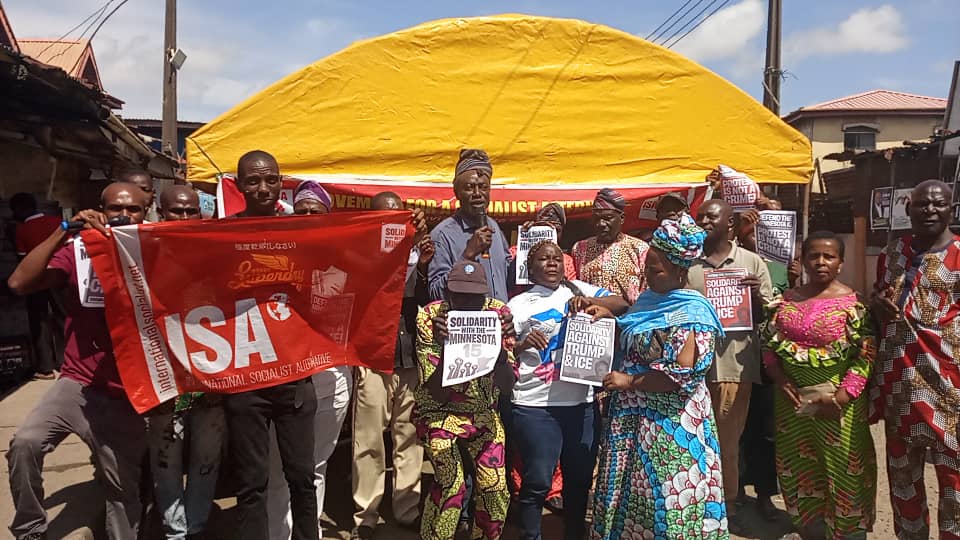
In Ajegunle, the activity began on the streets. Members of the MSA Ajegunle Branch, alongside the Ajegunle People’s Movement, assembled at one of the community’s busiest junctions for a public rally addressing the severe electricity crisis that has plagued residents for months. Comrades distributed the electricity campaign leaflets, sensitising workers and inviting the public to join the discussion.
Inside the symposium, speakers traced the historic roots of today’s crises.
First, Comrade Tunde opened by providing historical context, explaining that freedom was never truly achieved from Lord Lugard in 1914 to Babangida’s Structural Adjustment Program (SAP), which established the template for privatising and commercialising vital public assets like electricity. And how these cut across several commanding sectors that have become a site in crises.
One of the community leaders, including Comrade Emeka Bosah, Pastor M.O., and Iya Wura (a prominent woman leader in the electricity struggle), called on working people to stand up for their rights, pointing out that there is nothing to lose but their chains.
Barrister James, for instance, highlighted how capitalism repeatedly fails the working class, urging workers to move beyond religious divisions and demand systemic changes.
Tackling broader sociopolitical realities, Comrades Dagga and Adams pointed out the growing insecurity and the gold mining operations in the North, as well as the acute housing crisis in Lagos. Looking ahead to the 2027 general elections, they stressed that none of the candidates, for those who believed in the Tinubu, Atiku, and Obi dream, represent working-class interests, emphasising the need to build a party grounded in a socialist-orientated economy.
Abuja: Class, Power, and Struggle
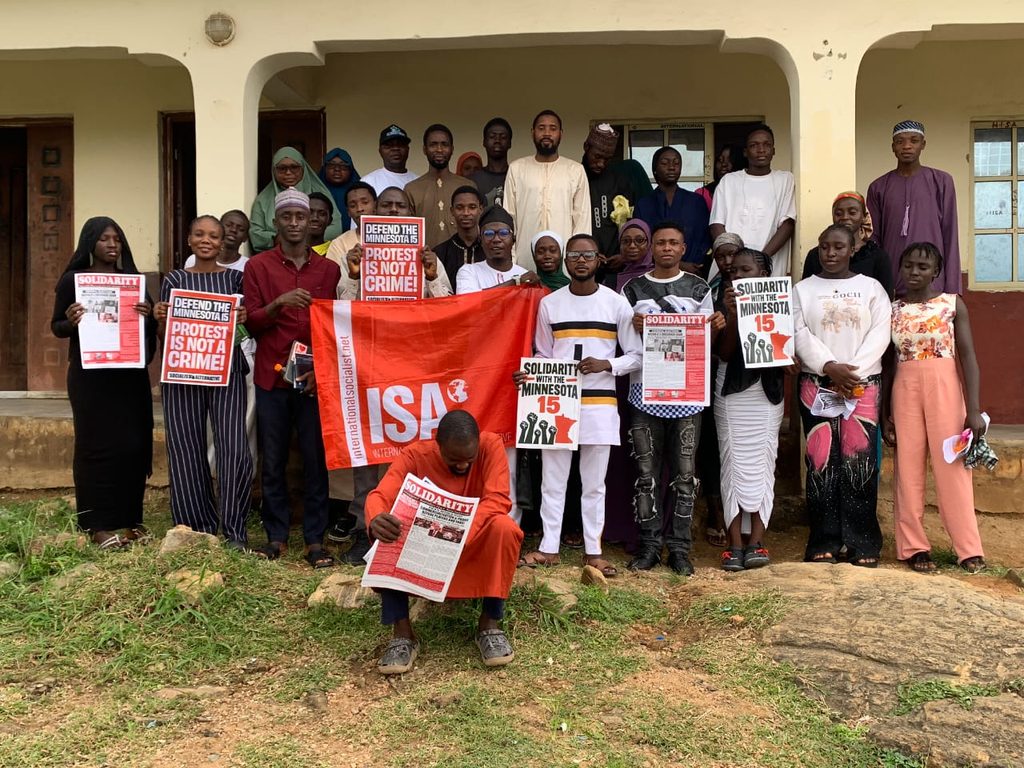
Simultaneously in Abuja, the MSA held its Public Symposium at Hope International School, Nyanya, under the theme “Nigeria at 66: Independence for Whom? Class, Power and the Unfinished Struggle for Liberation.” The event drew 37 participants, bringing together comrades, students, and youths from the communities.
In the lead-off, Comrade Godwin Kumai examined independence through a class lens. He argued that the mere transfer of political authority from colonial rulers to local elites left the economic structure intact. That the rupture, if liberation was at the front burner, would have seen both economic freedom and democratic control of national resources under a workers’ government. But, no. The same leaders who have ruled continue to serve big businesses.
Moderated by Comrade Moses, the Q&A segment allowed participants to connect the political analysis directly to their everyday struggles with inflation, unemployment, and poor public services.
Comrade Bilal wrapped up the session, reinforcing that political independence remains incomplete without economic democracy. Change will not come from passive observation but through active political consciousness, organisation, and solidarity among workers and young people.
Leaflets focusing on the electricity struggle were distributed to participants too, sparking further debate on the question of energy and public ownership.
The session yielded immediate results, with several attendees expressing interest in joining the MSA and participating in upcoming educational and political activities.
Both branches concluded its symposium with a strong message of international solidarity extended to comrades arrested in Minnesota, USA.
The Road Ahead: Building Working-Class Power
In one word, either on the streets of Lagos or in the classroom of Abuja, both symposia pointed to the same conclusion: that 66 years of Nigeria’s Independence have proven that capitalism cannot solve the fundamental needs of the Nigerian people. The working class, students, and oppressed youth must unite, build their own political instruments, and push for a socialist transformation of society where public wealth serves the public good.