
THE EX-LASU VICE CHANCELLOR ₦1 MILLION TUITION MYTH: WHY NIGERIAN WORKERS CAN’T PAY FOR GOVERNMENT FAILURES
End the Commercialisation and Privatisation of Public Education, including PPPs, and Proper Funding and Improved Conditions for Academic and Non-academic Workers
Progressive Taxation of Corporate Profits and Wealth, rather than placing greater taxation and educational costs on ordinary workers
By Bestman Michael Osemudiamen
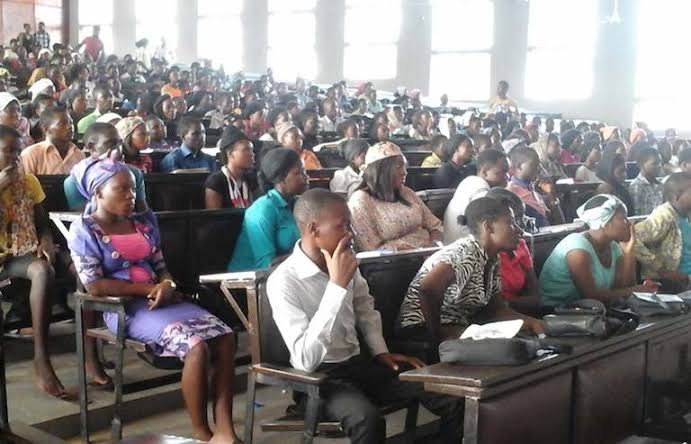
In a recent post by the Cable, Ex-Lasu Vice Chancellor Ibiyemi Olatunji-Bello said that for public universities to sustain financial independence, school fees across the country should be charged at N1 million naira. This came after the Education Minister urged VCs to diversify their funding sources for universities.
The answer to the education crisis is not to make education more expensive, but to make the wealthy and the corporations pay for the development of society. Nigeria has the resources to provide free and quality education; what is required is a political decision to place those resources under democratic public control and use them to meet social needs rather than private profit.
Quite oddly, her logic relies on the fact that secondary schools charge millions per term and that academic excellence is heavily paid for. In her words, “good quality education needs money.” To the minister, the era where Vice Chancellors have to wait for the government to fund everything must end.
When you reflect on these two statements, the state of public education in Nigeria becomes only but clearer to the ordinary people: that the very education that many of our government officials benefitted from freely and even affordably is no longer within the reach of the working people. It means the right to free and quality education at all levels, as enshrined in the constitution, is only a dream.
Over the years, the budgetary allocation for education has stagnated. It barely meets the 15-20% benchmark proposed by the United Nations and UNESCO that a government must allocate out of their public expenditure to education so as to reduce the rate of out-of-school children, close the gender gap, and drive literacy.
In the 2025 national budget, a whopping ₦3.52 trillion was allocated to education, representing a mere 7.3% of the total ₦47.90 trillion appropriated. To make things worse, the proposed 2026 budget drops the education sector’s budget to roughly 6.15% of total expenditure, according to the Development Research and Projects Centre (dRPC). Total domestic spending hovers around 3% of GDP. The Athena Centre for Policy and Leadership went as far as to emphasise that this deficit is a governance choice rather than a capacity gap, as state-level budget execution rates average only 66% to 67%, leaving one-third of approved education funds unspent.
When Ibiyemi Olatunji Bello and Tunji Alausa decry the lack of funds or financial sustainability or independence in the education sector, they forget that this fund shortage, if we were to borrow their terms, is only but a chronic reflection of a government that has historically prioritised debt servicing, defence, and physical infrastructure over human capital. Even while this happens, they forget to mention that our politicians wallow in jumbo salaries and embezzlement of funds, which is now done publicly to our faces.
Within the education sector itself, spending is heavily skewed toward recurrent expenditure, such as salaries and overhead, rather than capital development like building classrooms or training teachers. The Federal Ministry of Information and National Orientation breakdown illustrates this imbalance in the proposed 2026 allocations, with ₦966.9 billion earmarked for universities, ₦382.0 billion for polytechnics, and ₦633.3 billion for education parastatals, leaving minimal room for upgrading basic primary and secondary infrastructure. A modest ₦113.7 billion remains earmarked for critical direct interventions like school feeding programmes and scholarships, leaving primary education underfunded.
The aggressive shift toward a tax-driven economy, as championed under the Tinubu regime, comprises roughly 76% of total government collections. In just the first half of 2026, taxpayer revenue collections peaked at ₦28.3 trillion in 2025 and reached ₦21.6 trillion as recorded by the National Revenue Service. Yet, this has not translated into any social sector growth, nor has the state of public education been improved despite the working people being heavily taxed by the government.
The education crisis goes deeper. According to data published by the United Nations Children’s Fund (UNICEF), Nigeria has an estimated 18.3 million out-of-school children, making up 10.2 million primary school-aged children and 8.1 million secondary school-aged children. As detailed by Mohac Africa, Nigeria alone accounts for close to 15% of the entire global out-of-school population.
Once you put this in gender perspective, where girls make up 60% of the Nigerian population, coupled with the question of cultural norms, early marriages, and insecurity, you will find that a whopping 1 million girls drop out during the primary school period alone, while approximately 600,000 drop out while transitioning to junior secondary school.
Kebbi State is recorded to have the highest out-of-school rate at 67.6%, as put by the National Bureau of Statistics, which is closely followed by Sokoto State at 66.4%. In parts of northern Nigeria, two out of every three children are said to not attend school. Furthermore, the quality of education for those who do attend remains low.
As reported by the Athena Centre, only 27% of primary school pupils achieve minimum literacy benchmarks, and only 26% to 27% meet basic numeracy standards.
I have gone ahead to bring all these to the fore to prove that even when Ibiyemi says parents should pay heavily for education, it is that they have actually been paying heavily through the Tinubu-driven tax economy, with little or nothing to show for it.
For instance, despite the high budgetary allocation to the defence sector, the security of working people is still not guaranteed. Under the Tinubu regime, banditry, insurgency, and ransom-kidnapping surge drastically. This again has left many schools to shut down, with many children out of classrooms. To further show that our lives are in our hands, the Federal Ministry of Education has ordered the indefinite closure of 41 Federal Unity Colleges across the North-West, North-East, and North-Central regions.
The summary of this is a kind of state surrender where the government extracts taxpayers’ money from poor working parents who earn a gravely N70,000 minimum wage amidst the high cost of living and surge in price of food commodities, but their children are either denied safe access to classrooms or even denied their right to free and qualitative education? If the ordinary worker starves herself to pay her children’s tuition for 1 million naira, on the N70,000 minimum wage baseline, they will still not afford it.
From here, it is only clear that Ibiyemi’s statement only explains the years of ongoing commercialisation and attempts by the government to privatise the educational sector. It is important to reiterate once again that since the deceptive student loan scheme was introduced, almost all fees across federal universities have risen above 300%.
This attempt to privatise public educational assets was openly reflected when the government approved a 50-year concession of the 117-year-old King’s college in Lagos to the Old Boys’ Association (KCOBA) under the guise of public-private partnerships. The same PPP that has rendered the electricity sector in complete shambles. It confirms, like Ibiyemi’s logic, that the right to education should only be accessible to the privileged. Of course, I need not mention the rippling effects if such logic is adopted across universities.
Much deeper, Ibiyemi and her logic is only but a reflection of a system that has always served the interest of the few. It is the system that government after government has embraced, while the working people suffer and smile. It is a system that has benefitted no one other than big businesses and the profit-making agenda of the Nigerian ruling capitalist class and the imperialist curricula of the IMF and World Bank.
It should never be the responsibility of working parents and students to fund public universities. Education is a right. With the revenue generated, it is only logical to say that free and quality education is possible. Imagine reducing the ₦67 billion a year used to feed 469 politicians alone and their outrageous allowances and lifestyles, and invest that money in the needs of the people and social amenities. So, nobody should be deceived or queue behind the illusion that the government lacks funds to improve the education sector and the lives of its people. Neither should they think that increasing tuition fees will result in anything close to better.
For all the years that school fees have increased one way or another, within the same logic of lack of funds, what has it translated into? NOTHING. Still the same classrooms and lecture halls, in their overcrowding flaps. Hostels are in dilapidated conditions. ASUU still demands payment of unpaid salaries. So many mentionable crises still persist.
Young people, as well as working people, must begin to realise that they have been exploited for far too long. That, when a government cares less about their welfare, it is within the organised power in their unity to overthrow the system. We must know that there is an alternative. That capitalism is a rotten system responsible for the continual economic hardship and worsening living conditions. We must organise and demand for the democratic control of the education sector and other commanding heights of the economy under direct workers’ control. We must uphold the banner of an achievable planned economy, which is possible with socialism. Until then, the capitalist system will give room for people like Ibiyemi to continue to sow the illusion that free and quality education is impossible, except it is heavily paid for.